France Horse Meat Instead of Beef

 A Curt History of Equus caballus-Eating in France

By Stephanie DiCarlo
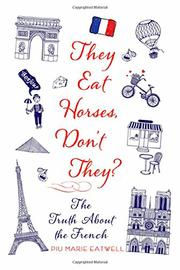
Piu Marie Eatwell lived in French republic for years, long plenty to compile a book on what exactly they do over in that location in France. Playing off the title of her book, "They Eat Horses, Don't They?: The Truth About French Eating," Eatwell has compiled pages of other such myths about the French. "Practice the French eat horses? Do French women bare all on the beach? What is a bidet really used for?"
Eatwell debunks and finds truth in her observations and life living in the French culture, culminating her experiences in this funny and charming volume. This volume reveals a fascinating picture of historical and contemporary France, a country that nevertheless retains much of the mystery, romance, and allure that has seduced foreigners for decades.
This book is worth a read if you love the culture, the French, or simply for an interesting peek into how other people live!
"I'm so hungry, I could consume a horse. — English saying
Extract from the Volume: Horsemeat in France
Everybody knows the French are into hippophagy. What is hippophagy, you ask? Well, it's got zero to practise with devouring the large, foul-tempered pachyderm that inhabits the waterways of Africa (a step besides far even for the omnivorous French).
Rather, quite only, it is the consumption of horses. The English language seem to exist convinced that the French regularly serve homo's 2nd-best friend at the dinner tabular array with the insouciance that would back-trail an ordinary steak au poivre.
It goes with the general perception of the French every bit a people who are prepared to shoot (and swallow) more or less anything that moves, and who consider all creatures bully and small-scale as being potentially part of the mundus edibilis. Just is this perception correct?
Hippophagy in France
It's a strange fact that equus caballus consumption in France was socially engineered and a relatively recent phenomenon. Hippophagy in ancient cultures has a long and distinguished history: it is said, for example, that the horse-eating Tartars or Mongols of Central Asia would put a piece of raw horsemeat under their saddles in the morning, to exist pounded to a fine mince by the cease of the twenty-four hour period – allegedly the origin of the celebrated steak tartare.
Sadly, this romantic myth is probably untrue, as it is thought that the dish owes its proper noun to the more prosaic fact that it was originally accompanied by Tartar sauce. In the Christian world, however, hippophagy was traditionally strictly taboo, and until the mid-nineteenth century, the French were as squeamish nearly eating horses equally everyone else in Europe.
Hippophagy had been forbidden by Pope Gregory 3 in the eighth century every bit an 'abomination' – although the pope, needless to say, was at the time at least as interested in quashing the pagans of the North, who sacrificed and ate horses, equally he was in creature welfare.
Horsemeat a Last Resort
Horsemeat was food to be resorted to merely past those in the direst straits –- such as the French peasantry during the food shortages of the Revolution, or the armies of Napoleon on campaign in the depths of the Russian winter.
In fact, it wasn't until the 1860s or even later that the French really got into horsemeat, largely due to the efforts of a zoologist named Étienne Geoffroy Saint-Hilaire, and a fanatical armed forces veterinarian, Émile Decroix. Decroix was obsessed with proving (to a skeptical public) that horsemeat was edible, and to this end, he chomped his fashion through several hundred dead horses suffering from every believable disease, and even a mad domestic dog past mode of comparison – the purpose of the rabid canine amuse-bouche being presumably to prove that, if you could survive eating a mad domestic dog, you lot could survive eating a horse.
Taking a rational and unsentimental approach, Decroix and his fellow scientists argued that it was better for the poor of Paris to kill their horses than to starve. There may as well, however, take been a less lofty motive to his campaign, in that offloading cheap horsemeat on the poor would have reduced the demand for beef and pork, thus making these classier meats less expensive for the rich.
The French public proved unreceptive to this idea, so a number of 'horsemeat banquets' were thrown, to which the press were invited –- including a particularly famous one in 1865 at the Grand Hôtel in Paris. At this fabled (or freakish) meal, according to the respected authority the Larousse Gastronomique, the carte was as follows:
A Horsemeat Menu
Horse-Broth Vermicelli
Horse Sausage and Charcuterie Boiled Equus caballus
Horse à la Mode
Horse Stew
Fillet of Horse with Mushrooms
Potatoes Sautéed in Horse Fat
Salad Dressed in Horse Oil
Rum Gâteau with Equus caballus Bone Marrow
Vino: Château Cheval-Blanc*
* Those who imagine that they could stomach simply the vino on this carte– Château Cheval-Blanc, ane of the near sublime of the Bordeaux Grands
The horsemeat banquets in Paris inspired similar feasts in Great britain, in Ramsgate in the 1860s, where the choice dishes were euphemistically described using the French term, as 'chevaline delicacies'. Funny enough, horsemeat in England did not catch on.
On the other side of the Channel, despite all the printing and candidature –-and the legalization of horsemeat for human consumption in 1866 –- the poor of Paris remained unreasonably reluctant to consume their aging nags. Until, that is, an result of seminal significance in French hippophagous history: the Siege of Paris during the Franco-Prussian War of 1870–71. Surrounded past the invading Prussian army, Parisians found themselves cut off from their customary food supplies.
Desperation
As a consequence, hunger and agony led to some hitherto unconsidered creatures becoming part of the Parisian diet. Horses were the get-go to exist served upwardly on dinner tables, quickly followed past cats, dogs and rats. Finally – as Christmas approached with the bleak prospect of a roasted rat as the star dish – information technology was the turn of the exotic animals in the Paris zoo.
Camels, kangaroos and even the zoo's famous elephants Castor and Pollux – all were auctioned off to Paris butchers, who fabricated a mint selling slices of zebra and chunks of elephant trunk (culinarily speaking the nigh prized part of an elephant's anatomy) to wealthy Parisians.
On 6 January 1871 the British writer, politico and diplomat Henry Labouchère noted in his diary: 'Yesterday, I had a slice of Pollux for dinner… It was tough, coarse and oily, and I do non recommend English language families to eat elephant equally long every bit they can get beef or mutton.'
The Christmas Twenty-four hours 1870 card of the chic Parisian Café Voisin, in the rue Saint-Honoré, featured such intriguing delicacies as éléphant consommé and jugged kangaroo. Cookery books appeared with recipes and instructions on how to melt everything from giraffe to wolf.
Now that the ancient taboo had finally been broken, hippophagy in France in the late nineteenth and early twentieth centuries went from strength to forcefulness, with the consumption of horsemeat increasing past 77 pct between 1895 and 1904.
In 1876 butchers in Paris marketed the mankind of over 9,000 horses, mules, and donkeys, a full weight of more than iii.7 million pounds. Prized for its loftier iron and nitrate content but relatively depression in fat, horsemeat was regularly prescribed by doctors for all sorts of ailments from anemia to tuberculosis. Owners of cavalry and shire horses were only besides delighted to offload their old nags at the knackers' yards.
The Height of Consumption
The first half of the twentieth century saw the apogee of horsemeat consumption: by 1913, native French horsemeat dealers were unable to keep up with demand and horsemeat had to be imported from away. Horsemeat butchers, or boucheries chevalines, with their distinctive horse'southward caput in a higher place their doorways, burgeoned, particularly in working-class areas, such equally the nineteenth arrondissement of Paris or the Nord-Pas-de- Calais region.
Cheaper than other meat and shunned by hippophile aristocrats, horsemeat was always working-course fare: even at the height of its consumption, information technology was associated with depression status and poverty.
From the 1950s onwards, though, the role of the horse changed. No longer a animal of burden or state of war (those roles having been taken over by the tractor and the tank respectively), the horse came to exist regarded as a pet by the increasingly pony-mad French. Even so, the average French consumer did non seem too fazed at the prospect of eating his new friend, as the horsemeat industry in France continued to thrive effectually the centre of the century (110,290 tonnes équivalent-carcasse or TEC, the industrial unit of measurement of horsemeat, were consumed in 1964).
Enter Brigitte Bardot
But in the 1980s, something disastrous happened to the horseflesh merchandise: the Devil recreated the erstwhile 1960s sex activity symbol and fashion model Brigitte Bardot as a vegetarian animal rights activist. She vociferously denounced the human action of eating an fauna that had become man'southward loyal companion, and condemned the –-admittedly ghastly-– conditions in which horses were transported to slaughter. It is probably at to the lowest degree partly downwards to Bardot'due south influence that the consumption of horsemeat in French republic fell dramatically in the 1990s.
Contrary to pop belief, and then, the French are condign increasingly hippophile and less and less hippophage. In 2004, for example, France consumed 25,380 tonnes of horsemeat (mainly imported from away) – less than half the corporeality consumed in Italy (65,950 tonnes). The Italian market place remains the primary export market for French horsemeat, valued at ninety million euros per yr. According to figures from the French livestock rearers' association OFIVAL (50'Role national interprofessionnel des viandes, de fifty'élevage et de l'aviculture), hippophagy dropped past 60 per cent betwixt 1980 and 2001.
And relative to other types of meat, the French don't consume much horsemeat at all – only 0.4 kg per French person per year in 2005, compared to 22.5 kg of beefiness.xiii The French, in fact – today as in the past – tend to eat horsemeat almost when pushed by fear of something worse: Bovine Spongiform Encephalopathy, for example. (Rates of horsemeat consumption shot up during the mad cow disease crisis of the mid-1990s, which led to a ten-yr ban on the export of British beefiness to the residual of the European Union.)
Even at present, the average Frenchman would prefer to eat a horse than British beefiness. Many French people actually think that BSE stands for 'British Spongiform Encephalopathy'. Nothing, in fact, terrifies the nation of the Laughing Cow more than the spectre of la vache folle.
Hippophiles vs Hippophages
Meanwhile, the battle in France between hippophiles and hippophages continues unabated. An attempt in 2010 to ban the consumption of horsemeat past law failed, although the animate being protection leagues did manage to become it taken off the shelves of many French supermarkets by organized campaigns of letter- writing.
And the boucherie chevaline – previously a common sight on the French loftier street – appears to take had its solar day, with but a few dozen of them now remaining in the whole of Paris. There are horse retirement homes where quondam Dobbin can put his hooves up in luxury later a difficult life of service, and there is even a legal provision for horse owners to stipulate on a sale that their horse is not to be sent to the knacker's yard (two- thirds of French lite horses and ponies are now protected in this way).
The French Horse Butchers' Association, of course, has taken up arms in opposition, marshaling arguments in support of the continued consumption of horsemeat. The virtually convincing of these is: 'mind your own business'. The least disarming is that the nine breeds of equus caballus reared in France for meat would die out if people stopping eating them.* (* One cannot, somehow, be convinced of an argument that says that the connected survival of a species depends upon its being eaten.)
Horseracers Corroborate
Hippophagy is supported by the French racing profession and stud farms, and even the renowned horse trainer and impresario Clément Marty, known to his adoring fans equally 'Bartabas', is on record every bit urging, 'Si vous aimez les chevaux, mangez-en!' ('If you dear horses, eat them!').
An acrimonious fence on the horsemeat question is currently raging in France between tweedy traditionalists on 1 side, and urban reformers on the other. In some ways, this clash has parallels with the foxhunting debate of the early 2000s in Britain – the master difference being that, autonomously from a few diehard activists, the French public is zilch similar as exercised past the rights and wrongs of eating horses every bit the British public was by the morality of hunting foxes with hounds.
The Horsegate Scandal of 2013

The relative laissez-faire mental attitude of most of the French public on the horsemeat issue was illustrated past the French reaction to the 'Horsegate' scandal of 2013. The crisis blew upward when '100 percent beefiness' products – including burgers, lasagnas and chili con carne produced past Findus, Picard and other frozen-food manufacturers –- were found to consist of annihilation upwardly to '100 percent horse'.
Investigations beyond the European Union revealed a tangled network of abattoirs, subcontractors, traders, meat processors, and frozen-food distributors.
In French republic, a Languedoc-based meat-processing visitor was accused past the French government of selling horse meat labeled equally beef. The French authorities and consumers were enraged, like everybody else, over the issue of traceability: a government inquiry was immediately set up and calls fabricated to the EU for the labeling of presumptive 'beefiness ' by country of origin.
The French response to British expressions of outrage at the idea of consuming horsemeat, withal, was a giant Gaullic shrug of the shoulders at the incomprehensible sentimentality of the British towards animals.
As the nutrient critic of the newspaper Le Monde, Jean-Claude Ribaut, observed: 'It'southward an English language ethnocentric attitude that applies also to rabbit, andouillette, frogs and calves' heads.' He added that, unlike the French, who legally define a horse equally a farm beast, 'the English language consider the horse a domestic animal.
That's their right,' noting for good measure that horse- meat is depression in fat and ideal for steak tartare. Le Monde fifty-fifty dug upwardly an good on the history and civilisation of food to explain to its readers the weird British antipathy to eating horseflesh: according to the distinguished academic, this aversion is due to Britain'south inception of the Industrial Revolution, which meant that horses lost their condition every bit working animals and became pets at an earlier date than in other parts of Continental Europe.
It's the Not Knowing that Bothers Them
The reaction of French consumers interviewed in supermarkets by the national idiot box news was not and then much cloy and outrage at eating equus caballus, as disgust and outrage at not knowing what they were eating. Perhaps the French have a indicate. After all, if i can tuck into an octopus and pufferfish sashimi without batting an eyelid (these are now standard fare in the boilerplate hip London restaurant), should sliced raw horsemeat with grated garlic, miso paste and soy sauce really pose much of a problem?
(In fact, the 'Horsegate' scandal revealed that a number of Asian restaurants in Britain had been discreetly but openly serving horsemeat successfully for years.) Equally a number of commentators on both sides of the Channel take pointed out, the true issue of 'Horsegate' is non so much the rights and wrongs of eating horses, as the fast-disappearing traceability of what we eat in a vast multinational production line.
Never may the French be accused of failing to turn a situation to their advantage, still. The solution to the crunch, according to their national media, is elementary: vive le boeuf français!
Myth Evaluation: Partly true. The French are divided between hippophiles and hippophagous, but in whatsoever event they eat a lot less horse than the Italians."
Piu Marie Eatwell went to France for a long weekend 1 August many years ago. She never left. Later on graduating from Oxford University with a beginning-course caste in English and literature, she trained start as a BBC television producer and then as a lawyer. Over the years, she has worked in various positions equally a documentary filmmaker, barrister, teacher, female parent, and — almost recently — full-time writer, both in London and Paris. They Eat Horses, Don't They?is her get-go book.
Buy They Eat Horses Don't They? on Amazon
Source: https://www.gonomad.com/5812-france-they-eat-horses-dont-they
0 Response to "France Horse Meat Instead of Beef"
Post a Comment